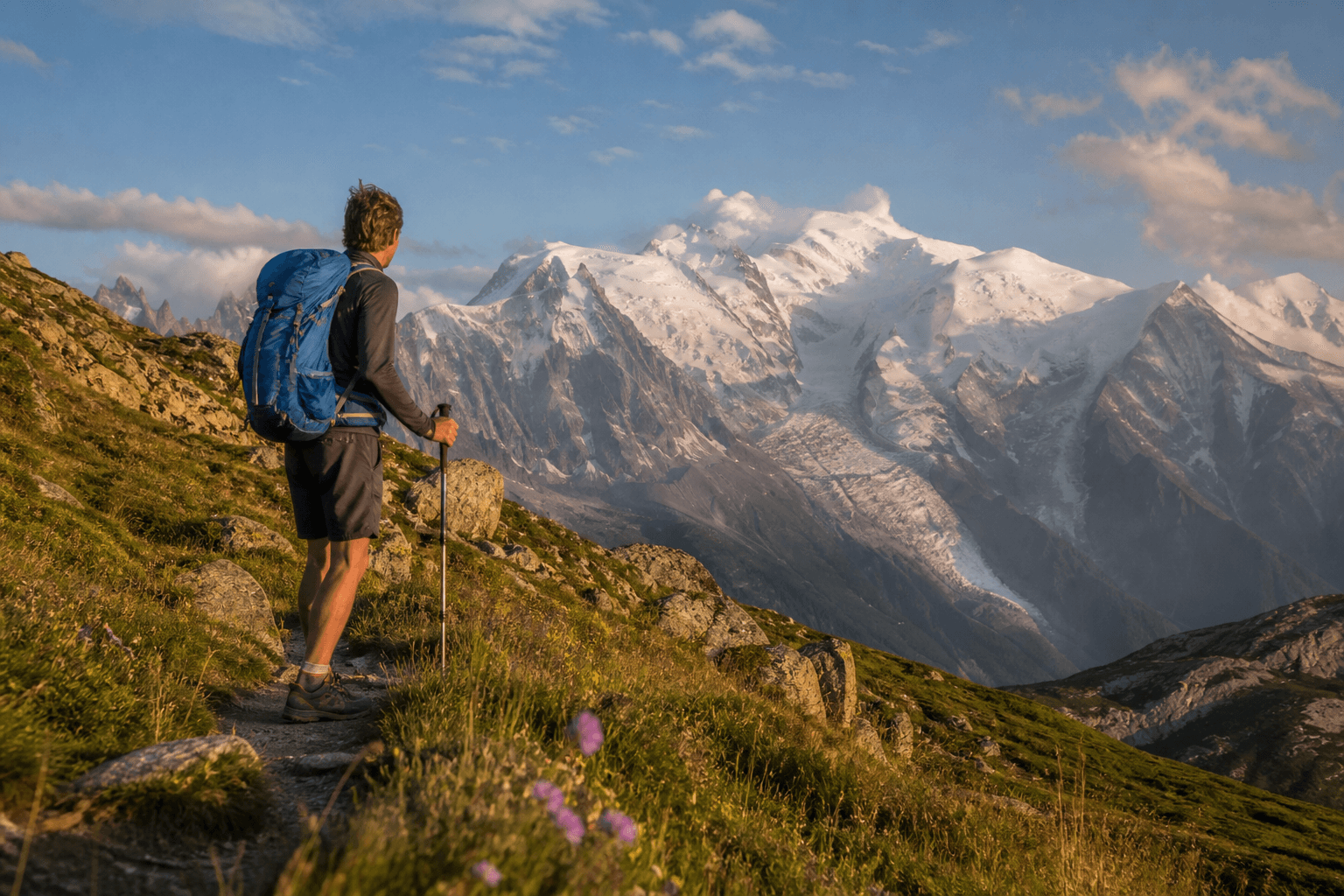
Tour du Mont Blanc Packing List
What to pack for the Tour du Mont Blanc hut-to-hut trek — clothing, refuge kit, navigation and the gear we actually carried on an 11-day self-guided TMB.
Hiked by Lee
Self-guided
Last verified
Packing for the Tour du Mont Blanc is a balancing act. You are not wild camping — refuges and hotels provide a bed, dinner and breakfast — but you still carry everything for 10–11 days through three countries, big cols and fast-changing alpine weather.
This TMB packing list is built from our own 11-day self-guided circuit: what we carried, what we wished we had left behind, and the kit that mattered most on steep variants and rainy Swiss days.
Also read: Tour du Mont Blanc — Complete Guide · TMB Cost Guide · Trek overview
Use the Packing List Builder to customise this list for your pace and lodging mix.
TMB packing — quick rules
| Rule | Why it matters on the TMB |
|---|---|
| Target under 7 kg base weight | The complete guide’s top tip — your knees will feel every extra kilo on 10,000 m of ascent. |
| No tent or stove | Half-board refuges and village stops mean you eat hot meals most nights. |
| Sleeping bag liner required | Dorm bunks in France, Italy and Switzerland — bring a lightweight liner, not a full bag. |
| Rain shell always accessible | We used ours on day 1 and day 9; weather turns quickly above 2,000 m. |
| Download offline maps | Variants (Robert Blanc, Fenêtre d’Arpette) need GPS backup even on a waymarked loop. |
Backpack & carry system
A 35–45 L pack is enough for hut-to-hut TMB if you pack discipline. We carried camera gear and still kept loads manageable by eating lunch on trail and using half board at night.
Inside the pack:
- Two packing cubes (clothes / tech)
- One dry bag for liner and sleepwear
- Rain cover or internal liner for wet days
- Small dirty-laundry sack
What stays in the bottom until checkout: sleep liner, hut slippers or camp shoes, evening clothes.
Clothing layers
Alpine days swing from warm valley mornings to cold, windy cols. Layering beats one heavy jacket.
Base & mid layers
- 2–3 moisture-wicking tees
- 1 long-sleeve sun layer
- 1 fleece or light down/synthetic puffy
- 1 pair trekking trousers (convertible or zip-off works well)
- 1 pair shorts — we wore shorts most days in September
- 3–4 pairs merino or synthetic hiking socks
- Underwear for 3–4 days (wash in refuge sinks)
Shell & weather
- Waterproof over-trousers (packable)
- Warm hat + thin gloves — essential on Col de Balme in sleet
- Sun hat and sunglasses
- Buff or neck gaiter
Footwear
We finished the TMB in trail shoes with a light pack. If you carry more camera gear or prefer ankle support on rocky variants, mid boots are the safer call.
- Broken-in hiking shoes or boots
- Camp sandals or flip-flops for refuges
- Blister kit: tape, Compeed, antiseptic wipes
Also read: Best Hiking Boots for Men
Refuge & sleep kit
| Item | Notes |
|---|---|
| Sleeping bag liner | Required in most refuges; cotton or silk — lightweight is fine in summer. |
| Earplugs + eye mask | Dorm snoring is real. |
| Quick-dry towel | Small microfibre; not all huts provide towels. |
| Toiletries | Travel size; biodegradable soap if you swim in lakes. |
| EU plug adapter | Refuges often have charging points — competition for outlets is high. |
We slept one night in a refuge tent at Tré-le-Champ (day 9) — liner still required, extra warmth layer helped.
Navigation & safety
- Phone with AllTrails (or similar) maps downloaded offline
- Power bank — 10,000 mAh minimum for multi-day between full charges
- Paper map or Cicerone / Kompass backup (optional but reassuring)
- Whistle + basic first aid: painkillers, blister care, rehydration salts
- Travel insurance documents (alpine rescue is not free)
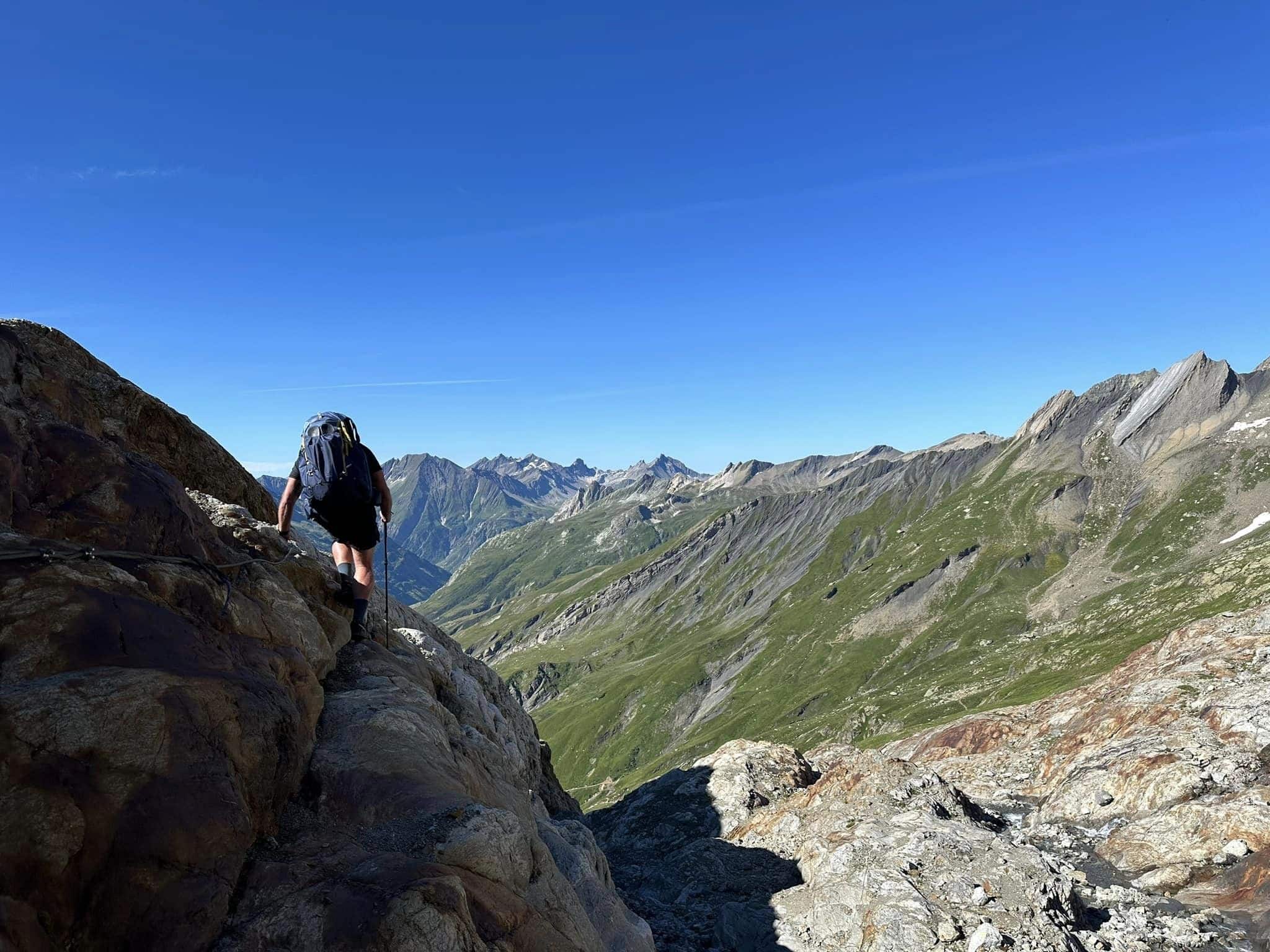
Variants we used — Refuge Robert Blanc and the day 3 descent into Italy — were technical. GPS and a charged watch were not optional for us.
Trekking poles & water
Poles saved our knees on long descents into Courmayeur and the final drop to Les Houches. Collapsible carbon poles pack easily on ladder sections.
Water:
- 2 L capacity (bottles or bladder)
- Optional filter — we drank tap/refuge water and stream water in Switzerland; a small filter is cheap insurance
Electronics & comfort
- Headlamp for early starts and dim dorm corridors
- Phone + camera (we also carried a GoPro)
- Kindle / earbuds for refuge downtime
- Portable charger and charging cables
Food you still carry
Half board covers dinner and breakfast at refuges. Pack:
- Trail snacks for between meals — bars, nuts, dried fruit
- Lunch money or picnic supplies on hotel days in Courmayeur and Champex
- Electrolyte tablets for hot climbs
Refuges and villages sell snacks, but prices rise with altitude — carry a day’s worth at all times.
What NOT to bring
| Leave at home | Why |
|---|---|
| Full sleeping bag | Liner only for dorm refuges |
| Tent, stove, fuel | Unless you have booked campsites only |
| Cotton t-shirts | Slow to dry in damp dorms |
| Jeans or heavy cotton trousers | Too heavy and slow-drying |
| Full-size toiletries | Refuges have basics; pack travel size |
| More than one “nice” outfit | One clean set for town stops is enough |
Packing list by category (checklist)
Wear / carry daily
- Hiking shoes or boots
- Trekking poles
- Pack (35–45 L) with rain cover
- Waterproof jacket + trousers
- Insulation layer
- Sun protection
- 2 L water
- Snacks + phone/maps
In the pack
- Liner + earplugs
- 2–3 hiking outfits
- Socks (3–4 pairs)
- Camp shoes
- First aid + blister kit
- Headlamp
- Charger + adapter
- Cash (EUR + some CHF)
Optional
- Drone / action camera
- Lightweight down jacket for September shoulder season
- Book or journal
Related TMB planning
- Day-by-day itinerary — 11 stages at a glance
- Refuges & accommodation — booking order and half-board tips
- Getting to Les Houches / Chamonix — Geneva transfers and first night
- TMB Cost Guide — what we actually spent
Next guide
Getting to Les Houches & Chamonix for the Tour du Mont Blanc
How to reach Chamonix and Les Houches for the Tour du Mont Blanc — Geneva airport transfers, trains, first night tips and alternative start points.
Next step
Build your packing list
Use the interactive planner — same trek data as this guide cluster.
Related guides
planning hub
After the Hike: Recovery, Lessons & What to Do Next
3 min read
Read guide →
trek comparison
Alta Via 1 vs Tour du Mont Blanc: Which Hut Trek Should You Hike?
Alta Via 1 · 7 min read
Read guide →
planning ladder
Beginner Hut-to-Hut Ladder: Iseltwald & Sorapis → Laugavegur → AV1 → TMB
6 min read
Read guide →