Kungsleden — Complete Planning Guide
Full researched planning guide for Sweden’s Kungsleden (Abisko–Nikkaluokta) — STF huts, self-catering, transport, costs, mosquitoes, gear and safety. Not hiked first-hand; compare with Laugavegur.
Last verified
The Kungsleden (“King’s Trail”) is Swedish Lapland’s flagship long-distance path. The full trail runs 440+ km, but most first-time and bucket-list hikers focus on the classic Abisko → Nikkaluokta section — about 105 km over 7–10 days through birch forest, open tundra, boardwalks and STF mountain huts under midnight-sun skies.
This is a full researched planning guide: hut systems, self-cater logistics, transport, SEK budget bands, mosquito season, gear and safety. Lee has not hiked it yet.
Quick links: Trek hub · European bucket-list treks · Laugavegur complete guide · Laugavegur packing list · Trek Finder · Packing List Builder · Trek Cost Calculator
Quick facts
| Section covered here | Abisko → Nikkaluokta (most popular intro) |
| Distance | ~105 km |
| Duration | 7–10 days typical |
| Full Kungsleden | 440+ km Abisko → Hemavan (multi-week) |
| Style | STF huts — primarily self-catered |
| Difficulty | Moderate terrain; remote logistics matter |
| Highest point (section) | Tjäktja Pass area (~1,100 m) |
| Best months | Late June – early September |
| Currency | SEK |
| Lee’s status | Bucket list — not hiked |
Route overview
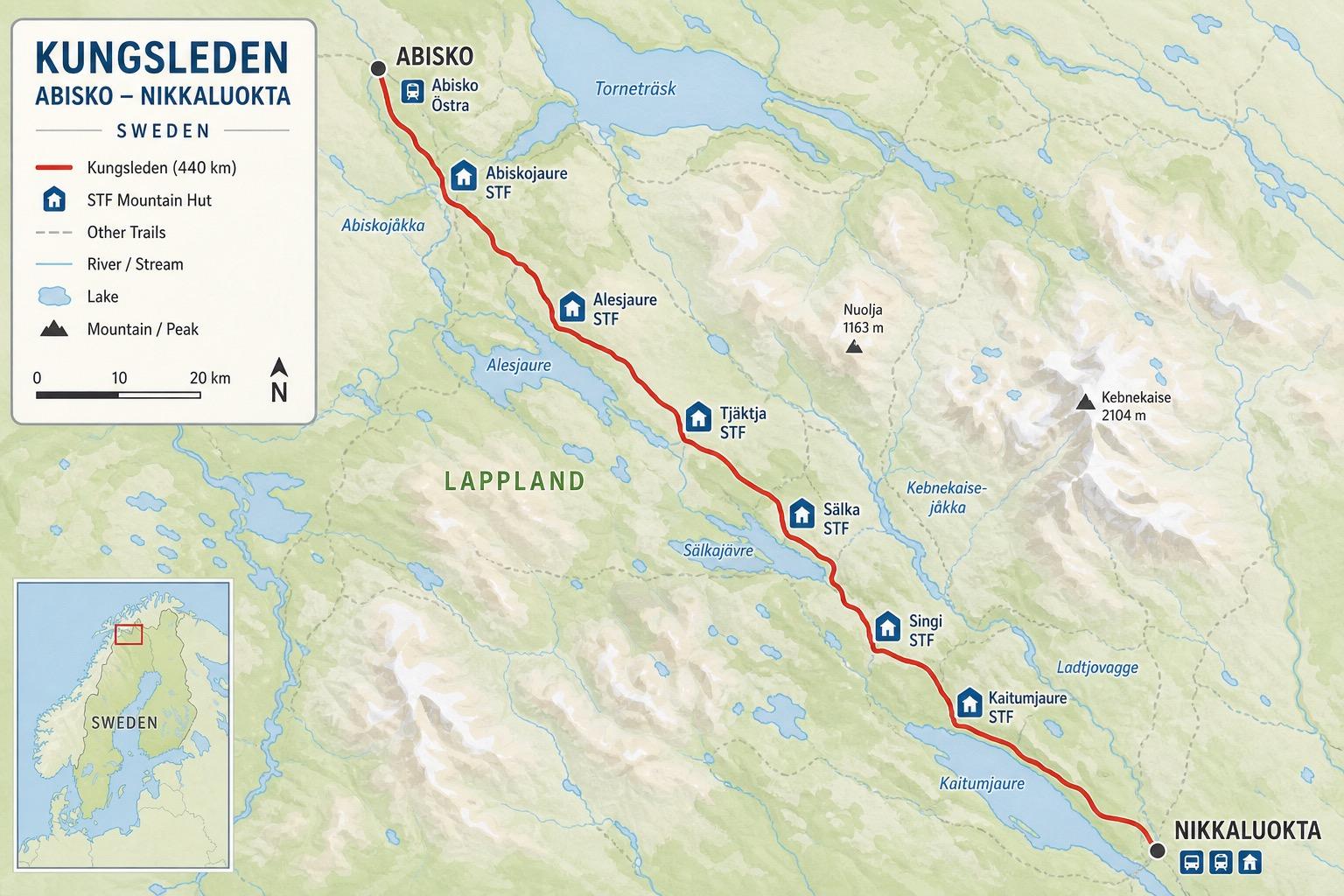
Unlike Alpine hut treks with big cols and half-board dinners, Kungsleden’s northern classic is about wilderness rhythm: boardwalks over bog, river crossings / boat taxis, long light, and simple hut evenings where you cook your own food.
The Abisko–Nikkaluokta section is popular because it is:
- Long enough to feel like a proper expedition
- Short enough for a 1–2 week holiday window
- Supported by a well-known STF hut chain
- Logistically clear: train/bus to Abisko, boat/bus exit at Nikkaluokta toward Kiruna
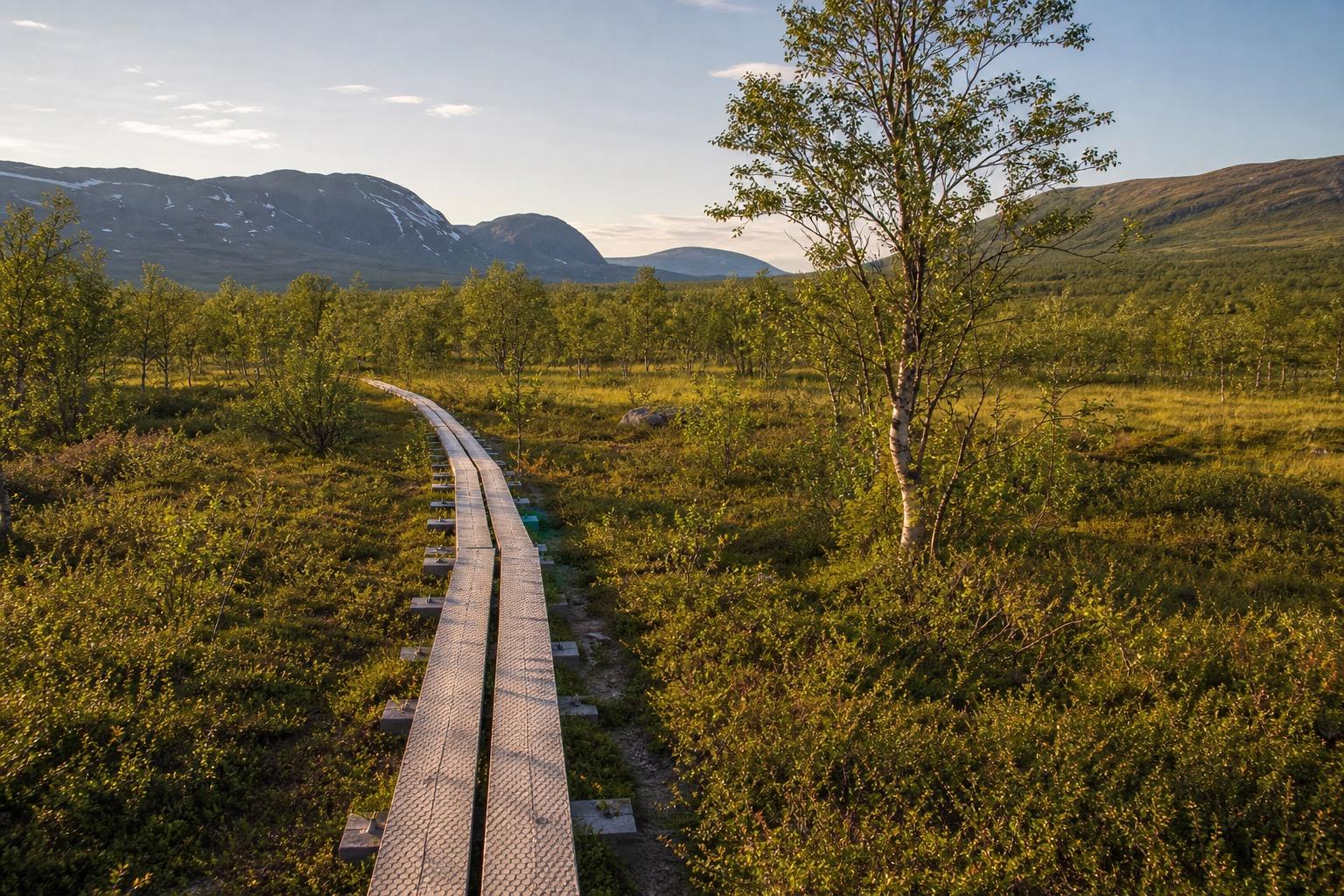
Classic stage / itinerary framework
Daily distances are often 12–20 km. Fitness and mosquito patience matter more than technical scrambling. Framework below is a common 8-day planning skeleton — compress or expand as needed.
| Day | Typical stage (research framework) | Approx character | Notes |
|---|---|---|---|
| 1 | Abisko Turiststation → Abiskojaure | Shorter opener | Settle into hut kitchen routine |
| 2 | Abiskojaure → Alesjaure | Longer valley / lake day | Boardwalk + bog possible |
| 3 | Alesjaure → Tjäktja | Building toward the pass | Protect a weather eye |
| 4 | Tjäktja → Sälka | Tjäktja Pass high point (~1,100 m) | Wind / fog common on the open section |
| 5 | Sälka → Singi | Flexible length | Good place to absorb fatigue |
| 6 | Singi → Kebnekaise mountain station (optional) | Side logistics | Summit attempts are a separate decision |
| 6 alt | Singi → direct Nikkaluokta approach | Skip Kebnekaise | Better if short on time or weather |
| 7–8 | Toward Nikkaluokta | Finish days | Book boat taxi / bus toward Kiruna |
Food-planning rhythm (self-cater)
| Meal | Typical approach (research) |
|---|---|
| Breakfast | Oats / freeze-dried / hut-shop top-ups |
| Lunch | Trail food carried from Abisko + occasional hut snacks |
| Dinner | Dehydrated meals or hut-kitchen cooking from carried staples |
| Buffer | +1 day of food for weather / transfer delays |
Getting there / transport
Inbound
- Fly to Kiruna (KRN) most commonly; sometimes via Stockholm
- Train / bus toward Abisko Turiststation (scenic Iron Ore Line corridor)
- Overnight at Abisko before Day 1 if arriving late — Arctic schedules are unforgiving
Outbound
- From Nikkaluokta, research typically involves a boat taxi sector and/or bus connection toward Kiruna
- Book or confirm peak-season transfers early — hikers bunch on good-weather finish days
- Build a buffer night in Kiruna before flights
Within the trail
Some lakes have seasonal boat services that cut wet/long shoreline walks. Treat them as optional logistics tools, not guarantees in shoulder season — verify current STF / local operator schedules.
Accommodation & how to book
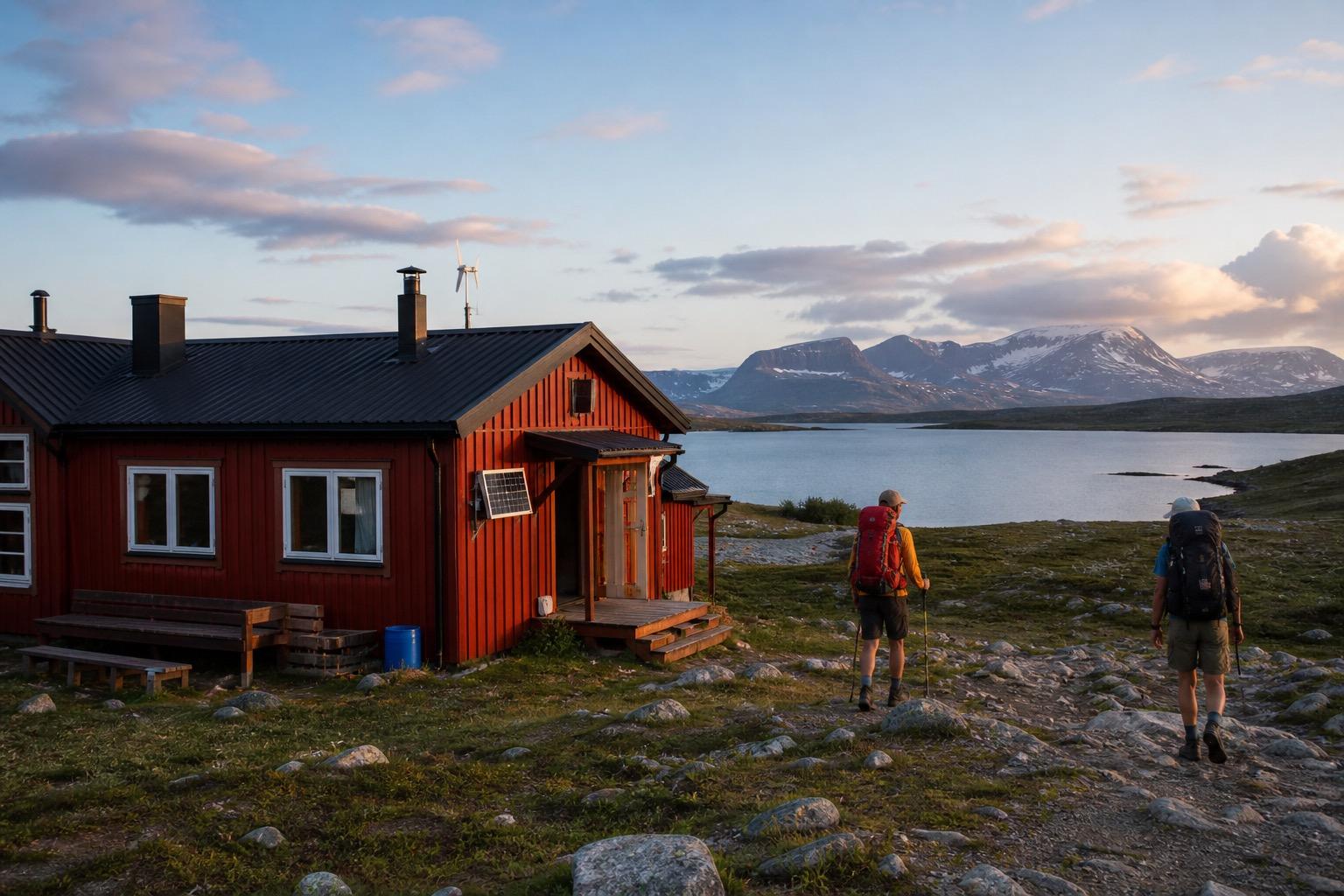
STF hut system (core difference vs Alps)
| Aspect | Typical Kungsleden pattern | Contrast |
|---|---|---|
| Food | Self-cater — cook in hut kitchens | Unlike Dolomites AV1 half-board |
| Shops | Some huts sell basic provisions (limited, pricey) | Don’t rely on full resupply every night |
| Beds | Dorm-style; book peak weeks | Similar scarcity pressure to popular Alps huts |
| Membership | STF membership often reduces rates | Worth checking before a week of nights |
| Camping | Allowed in many areas with rules; hut sites common | Good flex if beds are full |
Booking windows
- July peak: research suggests booking STF beds as early as the system allows
- Shoulder (late June / late August–early September): more flexibility, cooler nights, different mosquito/light trade-offs
- Bring a sleeping bag (or quilt) rated for cold nights even in summer — Arctic weather swings hard
- Carry a liner, head net and kitchen basics (see packing)
This is closer in spirit to Laugavegur self-reliance than to TMB demi-pension — but Iceland hut meal culture still differs, so don’t copy Laugavegur food assumptions blindly.
Costs / budget ranges
SEK estimates for planning — researched bands, not Lee’s receipts. Model in the Trek Cost Calculator.
| Category | Typical range (estimate) | Notes |
|---|---|---|
| STF hut night | SEK 400–700+ / night | Member vs non-member gap can be large |
| Hut shop food | SEK 100–300 / day top-ups | Bring staples from Abisko/Kiruna |
| Pre-trail food buy | SEK 400–900 | Depends how light you pack |
| Boat taxi / buses | SEK 200–600+ | Finish logistics |
| Kiruna / Abisko beds | SEK 800–1,800 / night | Ends of trip |
| 8-day mid budget | ~SEK 6,000–12,000 pp | Excl. flights; ~€550–1,100 at rough mid rates — verify FX |
Sweden is not a “cheap alternative to the Alps” once hut nights, transfers and northern transport are stacked. It is often simpler and less technical, not always cheaper.
When to go + weather / hazards
| Window | Research notes |
|---|---|
| Late June – early July | Midnight sun; snow patches possible; mosquitoes building |
| July – early August | Warmest hiking; peak mosquitoes; busiest huts |
| Mid-August – early September | Quieter; cooler; dark returns; northern lights possible late |
| Winter | Separate ski-touring / expedition skillset — not this guide |
Hazards / frictions: mosquitoes (real), cold rain/wind on open plateau, river crossings when bridges/boats aren’t running, navigation in fog, and underestimating food weight. Terrain is rarely Alpine-exposed, but remoteness is.
Difficulty & fitness
Kungsleden’s northern classic is moderate underfoot compared with GR20 or AV2, but don’t confuse “non-technical” with “easy holiday”:
- Back-to-back 15–20 km days with a food-heavy pack
- Boardwalk + root + bog walking fatigue
- Weather that can feel wintery in August
- Mental load of self-cater routine every night
If you loved Laugavegur hut rhythm, this is a logical Scandinavian sibling. If you only know half-board Alps treks, practise cooking-from-a-pack before you go.
Equipment / packing
Build from the Packing List Builder and cross-check ideas against the Laugavegur packing list (different trail, similar self-reliance themes).
Essentials research points to:
- Waterproof boots + gaiters for bog and rain
- Warm sleeping bag / quilt, liner, inflatable pillow
- Stove + fuel + cookset (confirm hut kitchen fuel norms; don’t assume free gas)
- Food plan for most dinners/breakfasts + hut-shop buffer
- Head net, repellent, after-bite
- Softshell / rain kit for wind on open ground
- Dry bags for food and sleeping kit
- Power bank, map/GPX, basic first aid
- Optional: light camp shoes for huts
No glacier kit or ferrata set for the standard Abisko–Nikkaluokta summer hike. Optional Kebnekaise summit detours are a separate assessment (conditions, guided options, fitness).
Navigation & safety
- Trail is generally well marked in season, but fog on open sections demands offline GPX + map literacy
- Distances between huts are real — don’t casually “add a stage” without food margin
- Check boat taxi and bridge status in shoulder season
- Share your hut plan; phone signal is patchy
- Travel insurance that covers remote rescue in Sweden is wise
- Respect Sámi reindeer herding areas and local access norms — stay on trail where signed
Compare with Lee’s first-hand treks
| Kungsleden (bucket list) | Laugavegur | TMB | |
|---|---|---|---|
| Lee hiked? | No | Yes — guide | Yes |
| Food | Self-cater STF | Hut meals / shop mix | Half-board huts + towns |
| Terrain | Moderate, remote | Volcanic, windy | Alpine cols |
| Crowds | Busy in July | Busy in peak | Very busy August |
| Best for | Arctic light + hut simplicity | Iceland bucket classic | First big Alps loop |
Also useful: quieter European forest walking like Mullerthal if you want low remoteness, and the bucket-list hub for how Kungsleden sits next to Haute Route / AV2 / GR20.
Official resources
- Swedish Tourist Association (STF)
- Visit Sweden
- Abisko / Kiruna tourism (regional planning context)
- Local boat taxi / Nikkaluokta transfer operators (confirm seasonally)
Next steps
- Choose Abisko–Nikkaluokta (this guide) vs a longer Kungsleden project
- Book STF nights and Kiruna flights for your window
- Build a food + fuel plan (the make-or-break logistics piece)
- Model spend in the Trek Cost Calculator
- Pack via the Packing List Builder
- Re-read Laugavegur for first-hand Arctic-hut pacing — then verify Swedish rules on STF
When Lee hikes Kungsleden, this becomes a first-hand cluster. Until then — book huts early, respect mosquitoes, and plan food like it matters (because it does).