
Alta Via 2 — Complete Planning Guide
Full researched planning guide for Alta Via 2 in the Dolomites — stages, rifugi, via ferrata options, transport, costs, gear and safety. Not hiked first-hand; compare with Alta Via 1 and Bernina.
Last verified
Alta Via 2 is the harder Dolomites high route — a roughly 160 km hut-to-hut traverse from the Bressanone / Brixen area south toward Feltre, typically walked in 10–14 days. Compared with Alta Via 1 (which Lee hiked self-guided), AV2 is generally more remote, more exposed and less “village-buffered,” with optional via ferrata variants on some stages.
This page is a complete researched planning guide: stage bands, rifugio booking reality, costs, ferrata decisions, gear and safety — not a trip report.
Quick links: Trek hub · European bucket-list treks · AV1 complete guide · Bernina guide · Bernina vs AV1 · Italy hiking hub · Trek Finder · Packing List Builder · Trek Cost Calculator
Quick facts
| Region | Dolomites, Italy |
| Classic line | Bressanone / Brixen area → Feltre |
| Distance | ~160 km (stage variants change totals) |
| Duration | 10–14 days typical |
| Style | Rifugio half-board (mostly) |
| Difficulty | Hard — exposure, remoteness, optional ferrata |
| Best months | July – mid-September |
| Currency | EUR (cash still useful in huts) |
| Lee’s status | Bucket list — AV1 only first-hand |
Route overview
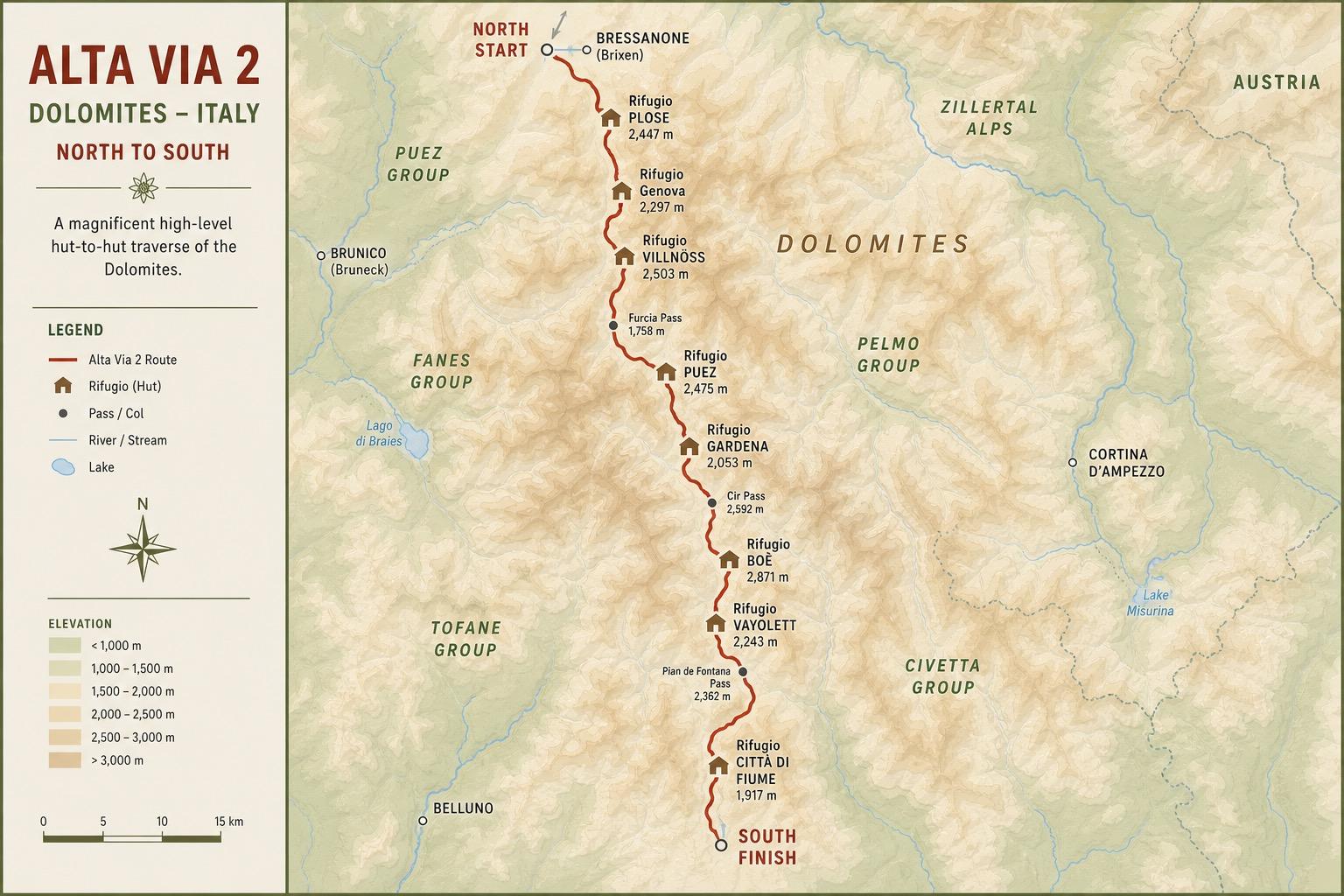
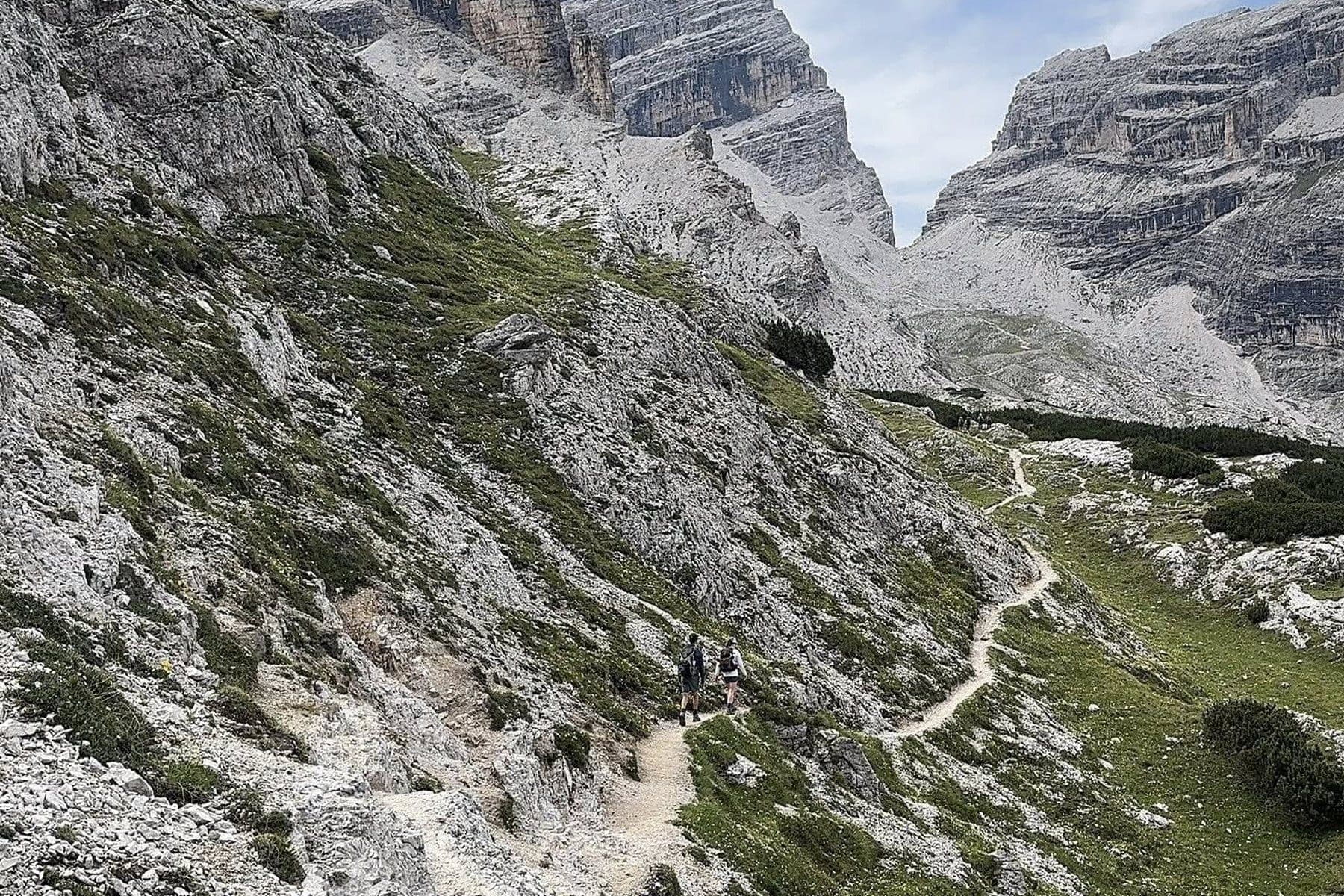
AV2 threads a more central / western Dolomites spine than the classic AV1 Braies–Belluno corridor. Research and guidebooks describe longer carries between services, sharper rock terrain and fewer “easy bail to a busy valley town” moments than AV1’s busier mid-sections.
Expect:
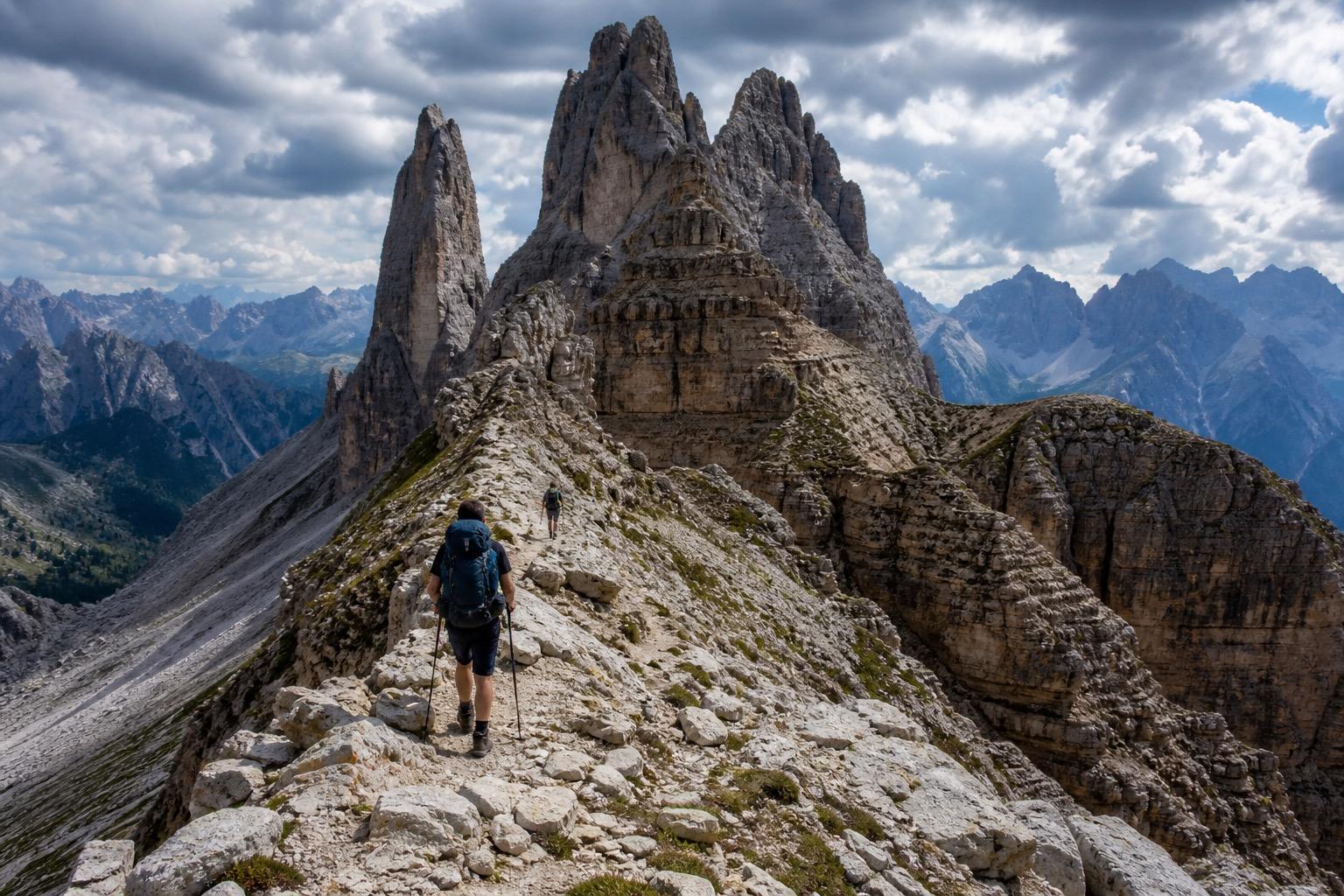
- Waymarked high paths with ledges, scree and cable-protected bits
- Optional via ferrata alternatives on certain massifs (kit + skill required)
- A social rifugio culture similar to AV1 — but nights can feel quieter and more committing
Classic stage / itinerary framework
AV2 is commonly split into roughly 12–13 stages. Hikers shorten or lengthen based on fitness and rifugio availability. Use this as a day-band planner, then lock exact rifugi season by season.
| Day band | Typical focus | Effort character | Planning notes |
|---|---|---|---|
| 1–2 | Brixen / Plose start → early northern rifugi | Steep openers | Settle into pack weight; confirm first bookings |
| 3–5 | Puez–Odle / Sella approaches | Iconic towers; rocky traverses | Busy junctions possible; keep GPX handy |
| 6–8 | Central high stages (Boè / Contrin corridor type) | Longer, more remote days | Weather critical; fewer casual café bail-outs |
| 9–11 | Southern Pale / Vette Feltrine approaches | Exposure + fatigue stack | Decide ferrata variants before these days |
| 12–13 | Final descent toward Feltre | Big down days | Celebrate — then bus/train exit |
| Buffer | +1–2 days | — | Storms and sore knees are normal |
Via ferrata decision framework
| Choice | Who it suits | Planning implication |
|---|---|---|
| Stay on hiking variants | Hikers comfortable with AV1 exposure but not ferrata | Pack stays lighter; still expect cables/ledges |
| Take selected ferrata options | Experienced ferrata hikers with kit | Helmet + harness + set required; weather cancels plans |
| Hire a guide for key sections | Strong hikers new to ferrata | Budget time + guide fees; book early in August |
Getting there / transport
Start — Bressanone / Brixen
- Fly into Venice (VCE), Innsbruck (INN), Munich (MUC) or Verona (VRN) depending on fares
- Train to Bressanone / Brixen (Brenner corridor)
- Local bus / cable-car connections toward the Plose / first-stage trailheads — verify current summer timetables
Finish — Feltre
- Descend to the Feltre area; buses connect toward Belluno / Padua / Venice rail nodes
- Build a buffer night if you have a fixed flight from Venice
Mid-route options
Some AV2 corridors approach road passes (e.g. areas near major Dolomite passes). These can work as weather exits, but research suggests not relying on frequent public transport the way you might on parts of AV1 or TMB.
Accommodation & how to book
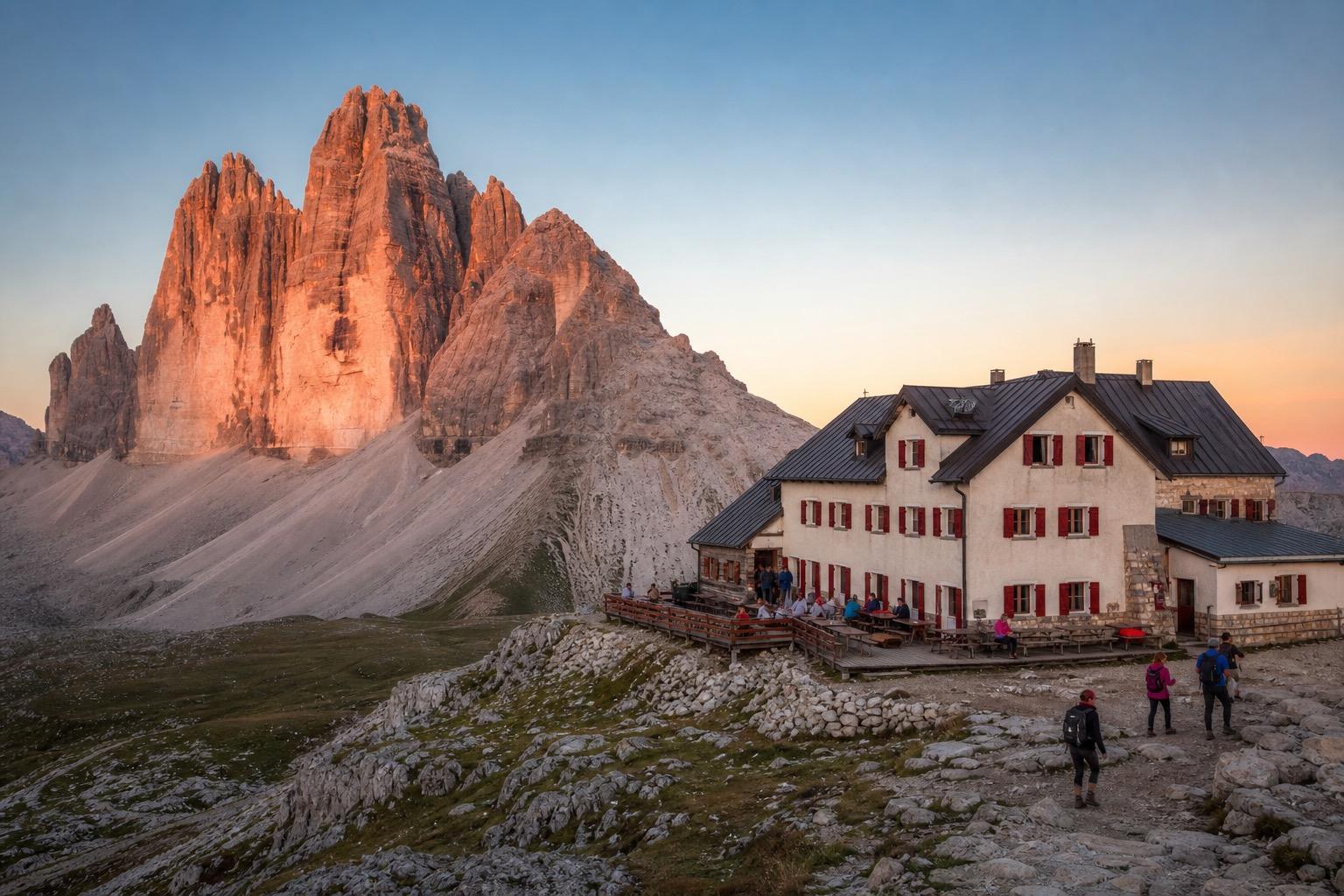
Overnight style is classic Italian rifugio:
| Aspect | Typical pattern (research) |
|---|---|
| Meals | Half-board common (dinner + breakfast); packed lunch optional |
| Rooms | Dorms standard; private rooms limited |
| Booking | Email / phone / hut websites — often not one central system |
| Payment | Card increasingly accepted; carry EUR cash anyway |
| Open season | Roughly late June – late September (hut-dependent) |
Booking strategy
- List your preferred night-by-night rifugi from a current guidebook / GPX package
- Book the scarce / remote nights first (these fill or refuse groups early)
- Keep one flex night for weather
- Reconfirm a week out — Dolomites hut plans shift with snow and staffing
Half-board means you can hike with a lighter pack than GR20 — similar philosophy to AV1 — but AV2’s longer stages still punish overpacking.
Costs / budget ranges
EUR estimates for planning — not Lee’s AV2 spend (there is none yet). Use the Trek Cost Calculator.
| Category | Typical range (estimate) | Notes |
|---|---|---|
| Rifugio half-board | €55–90 / night | Private rooms much higher |
| Trail lunch / drinks | €12–30 / day | Adds up across 12 days |
| Via ferrata rental / guide (optional) | €40–200+ | Only if taking technical variants |
| Buses / cable cars | €30–100 total | Start/finish + optional assists |
| 12-day mid budget | ~€900–1,700 pp | Excl. flights; style-dependent |
Compared with Swiss hut treks like Bernina, Dolomites rifugio half-board is often slightly kinder on the wallet — but flights and Cortina-adjacent tourism prices can still bite on approach nights.
When to go + weather / hazards
| Window | Research notes |
|---|---|
| Late June – early July | Some high sections may hold snow; confirm openings |
| Mid-July – August | Most reliable hut season; afternoon storms frequent |
| Early – mid September | Quieter; cooler; some huts begin closing |
| Outside season | Not a standard self-guided hut itinerary |
Hazards: exposure on ledges, wet rock, lightning on ridges, residual snow on north faces early season, and commitment — long stages with limited intermediate shelter. Via ferrata variants add fall / gear risk if attempted without skills.
Difficulty & fitness
AV2 is best treated as “AV1+, with fewer soft landings.”
- Be solid on AV1-level ascent volume and rocky footing first
- Comfortable with exposure and careful footwork when tired
- Able to absorb long days when rifugio spacing demands it
- Honest about ferrata: optional lines are not “tourist ladders” everywhere
If AV1 felt continuously maximal, research suggests waiting a season — or choosing a quieter but less exposed traverse like Bernina — before AV2.
Equipment / packing
Use the Packing List Builder. Core kit:
- Broken-in boots or sturdy approach shoes for limestone / dolomite rock
- Shell, insulating midlayer, sun protection
- Hut kit: liner, light towel, earplugs, power bank, cash
- Poles, blister kit, headlamp
- If taking via ferrata variants: UIAA-rated harness, ferrata kit (with energy absorber), helmet, gloves — and the skills to use them; hire a guide if unsure
- Offline maps + paper backup
Skip camping gear on a classic rifugio itinerary. Do not skip helmet/ferrata kit if your chosen variant requires them.
Navigation & safety
- Follow CAI waymarks, but junctions and variants need offline GPX
- Start early on exposed stages; Dolomites thunderstorms are routine
- Know your ferrata grade limits — downgrade variants in poor weather
- Share nightly rifugio plans with someone off-trail
- Rescue insurance covering helicopter in Italy is strongly recommended
- Turn around: AV2 ego is a poor substitute for judgment on wet ledges
Compare with Lee’s first-hand treks
| AV2 (bucket list) | AV1 | Bernina | |
|---|---|---|---|
| Lee hiked? | No | Yes | Yes |
| Vibe | Wilder Dolomites | Classic rifugio social trek | Quiet Swiss cols |
| Exposure | Higher average | Moderate, busy corridor | Alpine but different rock culture |
| Booking | Rifugio-by-rifugio | Competitive summer | SAC / Swiss systems |
| Ferrata | Optional on variants | Limited / avoidable for standard AV1 | Not the same problem set |
Also see TMB if you are comparing three-country hut comfort vs Dolomites rock, and the bucket-list hub for AV2 vs Haute Route / GR20.
Official resources
- Dolomiti.org — visitor / UNESCO info
- CAI — Club Alpino Italiano
- Provincial tourism sites for South Tyrol / Belluno (timetables + valley transport)
- Individual rifugio websites for the season you book
Next steps
- Confirm you want AV2 specifically (not a second lap of AV1 with side trips)
- Draft a 12–14 day rifugio string with weather buffers
- Decide ferrata variants yes/no before you pack
- Budget in the Trek Cost Calculator
- Build kit in the Packing List Builder
- Re-read the AV1 complete guide for hut culture — then verify AV2 stages on official/current sources
When Lee hikes AV2, this page becomes a first-hand cluster. Until then — plan for exposure, book early, and respect that “harder than AV1” is the point.
Related guides
trek cost guide
Alta Via 1 Cost | €750–1,180 for 8 Hut Days
Alta Via 1 · 6 min read
Read guide →
trek difficulty guide
How Hard Is Alta Via 1? Difficulty & Fitness Guide
Alta Via 1 · 5 min read
Read guide →
trek food guide
Alta Via 1 Food Guide: Rifugio Meals & Trail Snacks
Alta Via 1 · 5 min read
Read guide →