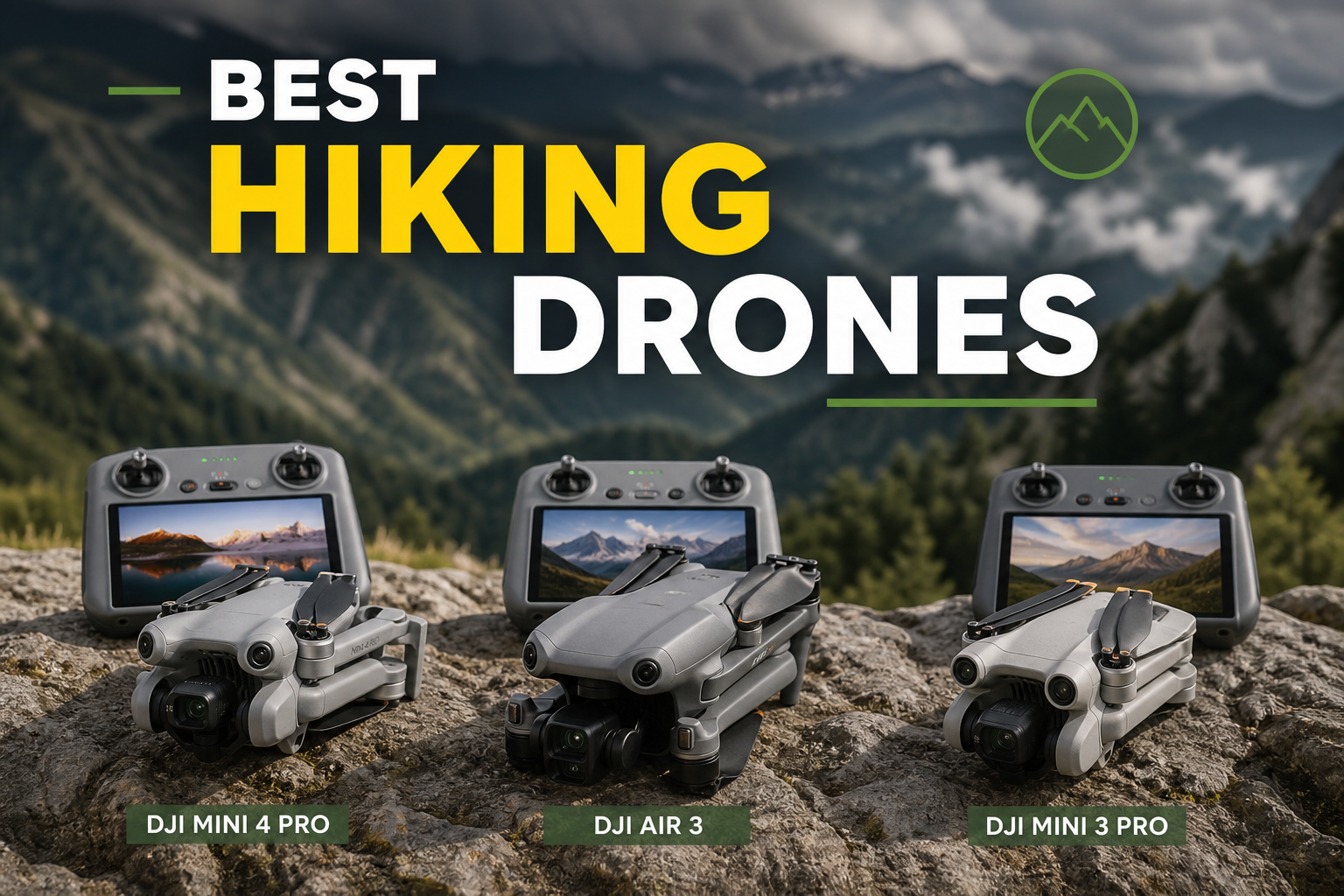
Full trail review
In-depth analysis
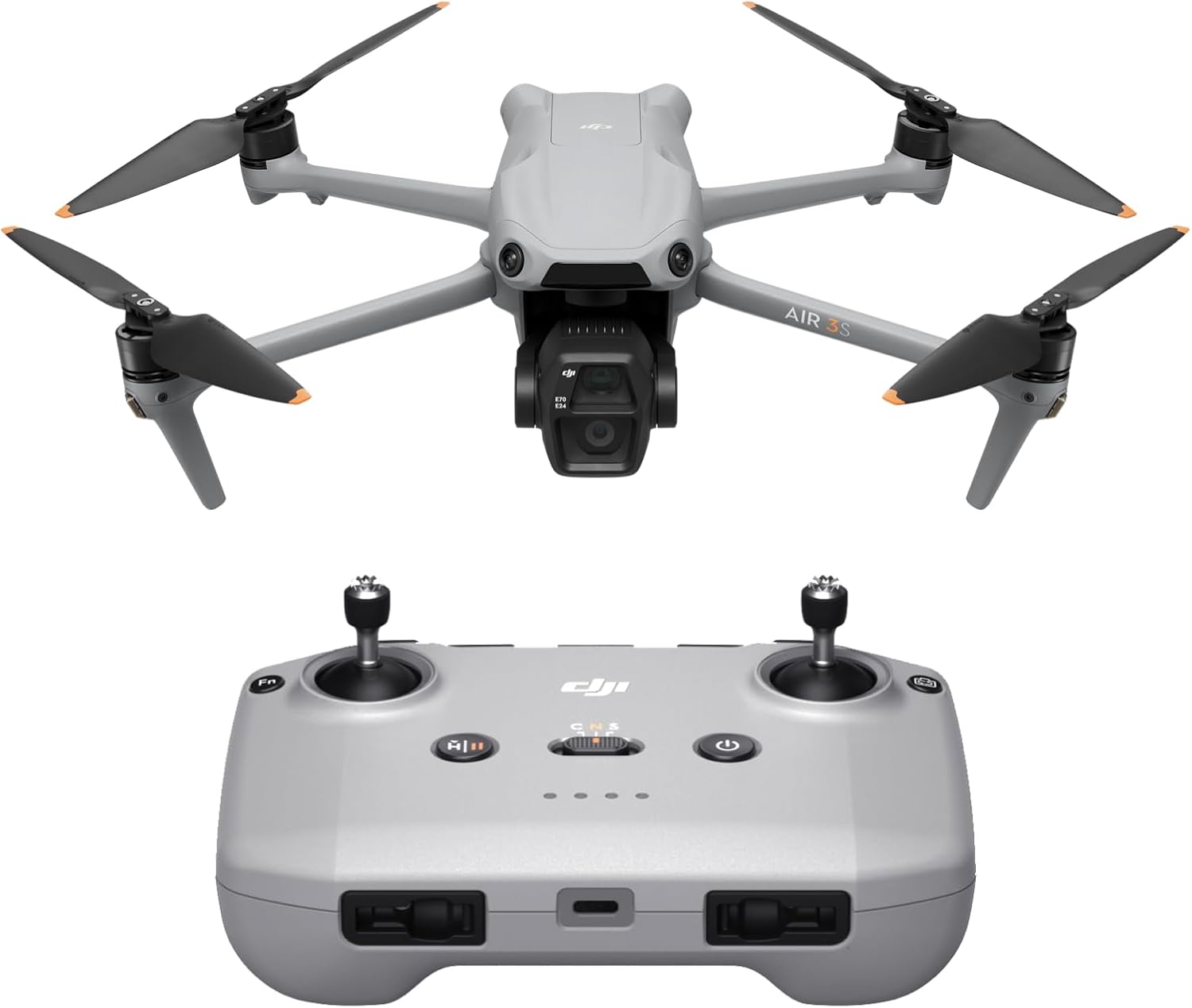
The DJI Air 3 is for hikers who don’t mind carrying extra weight in exchange for professional-grade shots. It’s best suited for advanced drone pilots who want more creative control and longer-range flights. Compared to the DJI Air 2S, the Air 3 offers improved flight time, enhanced obstacle avoidance, and a dual camera system, making it a more versatile choice for demanding outdoor conditions.
Suited for hiking
DJI Air 3
DJI
At a glance
- Editorial score
- 8.4/10
What we like
- Professional-level image flexibility
- Long battery life for extended flights (carry extra drone batteries to maximize time in the field)
- Dual cameras allow varied perspectives
- Rock-solid performance in wind
Trade-offs
- Significantly heavier than sub-250g drones
- Requires drone registration in most countries
Overview
The DJI Air 3 is for hikers who don’t mind carrying extra weight in exchange for professional-grade shots. It’s best suited for advanced drone pilots who want more creative control and longer-range flights. Compared to the DJI Air 2S, the Air 3 offers improved flight time, enhanced obstacle avoidance, and a dual camera system, making it a more versatile choice for demanding outdoor conditions. The Air 3’s dual cameras are its biggest strength. On a ridge hike, you can capture sweeping wide landscapes, then switch to the telephoto lens for close-up shots of distant peaks. The 46-minute flight time means fewer battery swaps on long trails, but it’s still wise to pack extra drone batteries to take full advantage of its endurance.
Who it's for
While it’s heavier and slightly larger than the Mini series, it handles wind better and offers a more stable flight in tough alpine conditions. For comparison, the Air 3 is a step up in power and control over the DJI Air 2S, with longer flight time and improved obstacle sensing. However, unless you’re serious about drone filmmaking, the Mini 4 Pro is easier to carry and more affordable than these expensive models.
Best for experienced hikers and drone users who want advanced shooting options and stability in tough conditions.
Key features
Weight
720g
Dual camera system (wide
Dual camera system (wide + telephoto)
4K/60fps video and 48MP
4K/60fps video and 48MP stills
46 min max flight
46 min max flight time
Omnidirectional obstacle sensing
Omnidirectional obstacle sensing
Key Features to Consider
- Weight: Impacts portability and whether registration is required. Under 250g drones are easier to hike with. - Camera Quality: Ranges from 2.7K to 4K HDR and beyond. Higher resolution means more editing flexibility. - Flight Time: Determines how much filming you can do on one battery. Always plan for spares on long hikes. - Obstacle Avoidance: Adds safety when flying near cliffs, trees, or tight mountain paths. - Wind Resistance: Critical for alpine hiking where conditions can shift quickly. - Intelligent Features: Look for intelligent features such as automated shooting modes (like timelapse and vertical shooting) and advanced navigation, which enhance versatility and ease of use, especially in newer models. - App & Ecosystem: DJI’s Fly app is user-friendly and widely supported; Autel offers independence from DJI but has a steeper learning curve.
How it compares
Mini 4 Pro wins portability and sub-250 g convenience; Air 3 wins wind stability, dual cameras, and flight confidence on exposed ridges.
Read full review$319.00indicative on Amazon
Air 3 is larger and heavier but more capable in gusty alpine conditions — choose Air 3 when filming is a primary trip goal, not a bonus.
Read full reviewMavic 3 Pro wins image quality and pro controls; Air 3 is the lighter middle ground for hikers who still want serious camera without full cinema weight.
Read full reviewAir 3 wins reveal shots and ridge context you cannot fake handheld — at the cost of batteries, regulations, and pack space.
Read full reviewReady to buy?
DJI Air 3
Trade-offs
- Significantly heavier than sub-250g drones
- Requires drone registration in most countries
Bottom line
DJI Air 3 is the hiking drone I recommend when wind and image quality matter more than fitting under 250 g registration thresholds. Budget for extra batteries, ND filters, and a landing pad — then fly only where rules and trail etiquette allow.
Ready to buy?
DJI Air 3
Features Head to Head
DJI Mini Series vs DJI Air 3 - *Mini Series:* Ultra-portable, registration-free, easy for beginners, but less stable in high winds compared to bigger drones. More affordable than expensive models, making it a great entry point for casual users. - *Air 3:* Heavier, more stable—especially in strong winds thanks to its status as a bigger drone—dual cameras for professionals, but requires more pack space, drone registration, and comes at a higher price similar to other expensive models with advanced features. Obstacle Avoidance vs No Obstacle Avoidance - *With Sensors (Mini 3 Pro, Mini 4 Pro, Air 3, Autel EVO Nano+):* Safer for flying near cliffs, forests, or while hiking solo. Great for peace of mind. - *Without Sensors (Mini 2 SE):* Cheaper and lighter, but requires careful piloting. Best for open landscapes and beginners who fly cautiously. 👉 In short: ask yourself three questions — *How
FAQ: Best Hiking Drone
- What controls or apps do I need to fly DJI drones?
- What are some classic or well-known hiking drone models?
- Which drone brand is most popular among hikers?
User Scenarios / Use Cases
Not every hiker has the same needs. Here are some common scenarios and the best hiking drone for each:
👉 The takeaway: match your hiking style to your drone. If you hike light and casual, a Mini 2 SE is enough. If you’re serious about filmmaking, step up to the Air 3 or consider the DJI Mavic Pro as a classic choice. For everyone else, the Mini 3 Pro or Mini 4 Pro are among the best drones for hiking and travel, offering a great balance of features for most users.