Ohrid Travel Guide | 10 Reasons It's Europe's Best-Kept Secret
Ten reasons Ohrid is Europe's best-kept secret — ancient Lake Ohrid, St. John at Kaneo, Old Town churches, St. Naum, Bay of Bones, Trpejca and why this UNESCO Balkan gem stays affordable.
Last verified
Forget what you think you know about European travel. I found a place more stunning than the Amalfi Coast, steeped in more history than many Greek islands — at a fraction of the price. A treasure tucked in the heart of the Balkans: Ohrid.
Nestled on the border of North Macedonia and Albania, the city and its namesake lake are one of the few places on Earth recognised by UNESCO for both natural and cultural heritage. Despite world-class status, it remains almost impossibly undiscovered. I came on a road trip with a drone and a lot of curiosity. I left with ten reasons that will make you rethink your travel bucket list.
Plan your trip: North Macedonia overview · Struga lakeside base · North Macedonia destination hub
Watch: North Macedonia highlights
Ohrid — Quick Facts
| Location | Southwest North Macedonia, on Lake Ohrid (Albanian border south) |
| UNESCO | Natural + cultural World Heritage (lake and city) |
| Best for | History, churches, lake swimming, boat trips, sunset dining |
| Airport | Ohrid Airport (10 min from Struga, ~15 min from Ohrid town) |
| Base options | Ohrid (buzzy old town) or Struga (quieter, local) |
| Best months | May–September (warm lake swimming; June was blissfully quiet) |
| Sample costs | Coffee ~€1 · lakeside dinner for two ~€30 · St Naum boat ~€15 |
10 Reasons Ohrid Is Europe's Best-Kept Secret
1. The oldest lake in Europe
Everything in Ohrid begins and ends with Lake Ohrid — one of the oldest and deepest lakes in Europe. Scientific evidence suggests at least 1.3 million years; some estimates go much further. While ice ages reshaped the continent, this lake remained a stable sanctuary.
They call it a museum of living fossils: 200+ species found only in its waters. The lake shifts from sapphire blue in the depths to translucent turquoise at the shore. In summer it feels less like a lake and more like a freshwater sea. Galičica National Park rises dramatically from the shoreline — a forgotten world, not a packaged European holiday.
2. A living museum — the Old Town
Ohrid's Old Town is not a sterile attraction — it's a living neighbourhood where history is everywhere. Cobblestone streets cascade down the hill to the lake; traditional houses with overhanging floors almost kiss across the lanes.
By day: get lost on purpose. Stumble on centuries-old churches in courtyards. Find the Ancient Theatre (~200 BC) — Greek plays, Roman gladiators, buried by locals, rediscovered in the 1980s.
By night: the Ohrid Boardwalk hugs the cliffs below town. Rocky beaches, restaurants built over the water, sunset turning terracotta roofs gold. Fresh lake fish as the sky goes pink and orange — historical deep-dive by day, serene lakeside dining by night.
3. The Jerusalem of the Balkans
Legend says Ohrid once had 365 churches — one for every day of the year. The folklore exaggerates; the spiritual weight is real.
- Church of Saint Sophia — 11th-century cathedral with world-significant medieval frescoes; Byzantine art time capsule
- Church of St. Clement and Panteleimon at Plaošnik — believed site of one of Europe's first universities (9th century), central to Slavic literature
- Countless smaller churches — peek into an unassuming stone building and meet a thousand-year-old painted saint
You don't need to be religious to feel it. The air hums with ancient prayers.
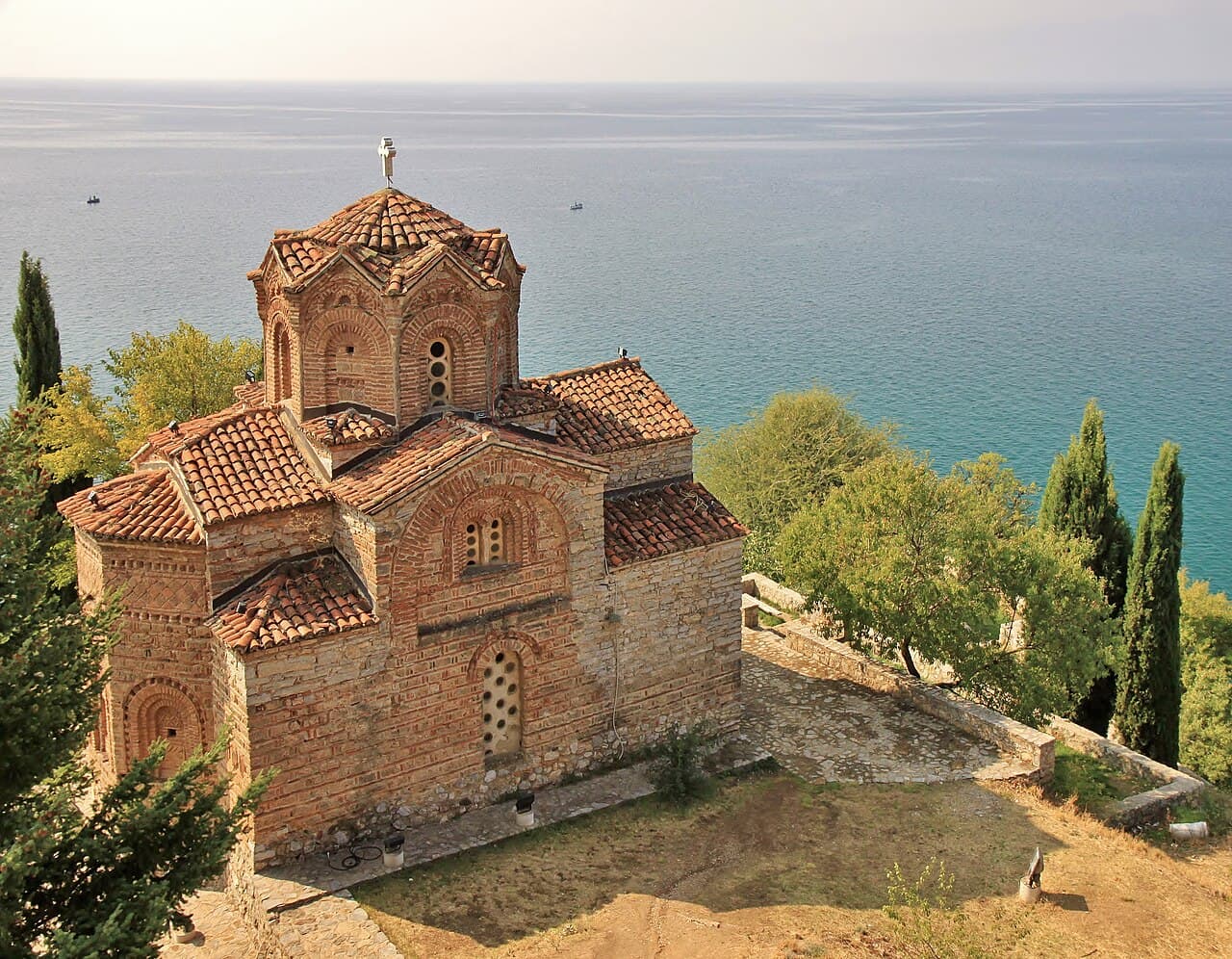
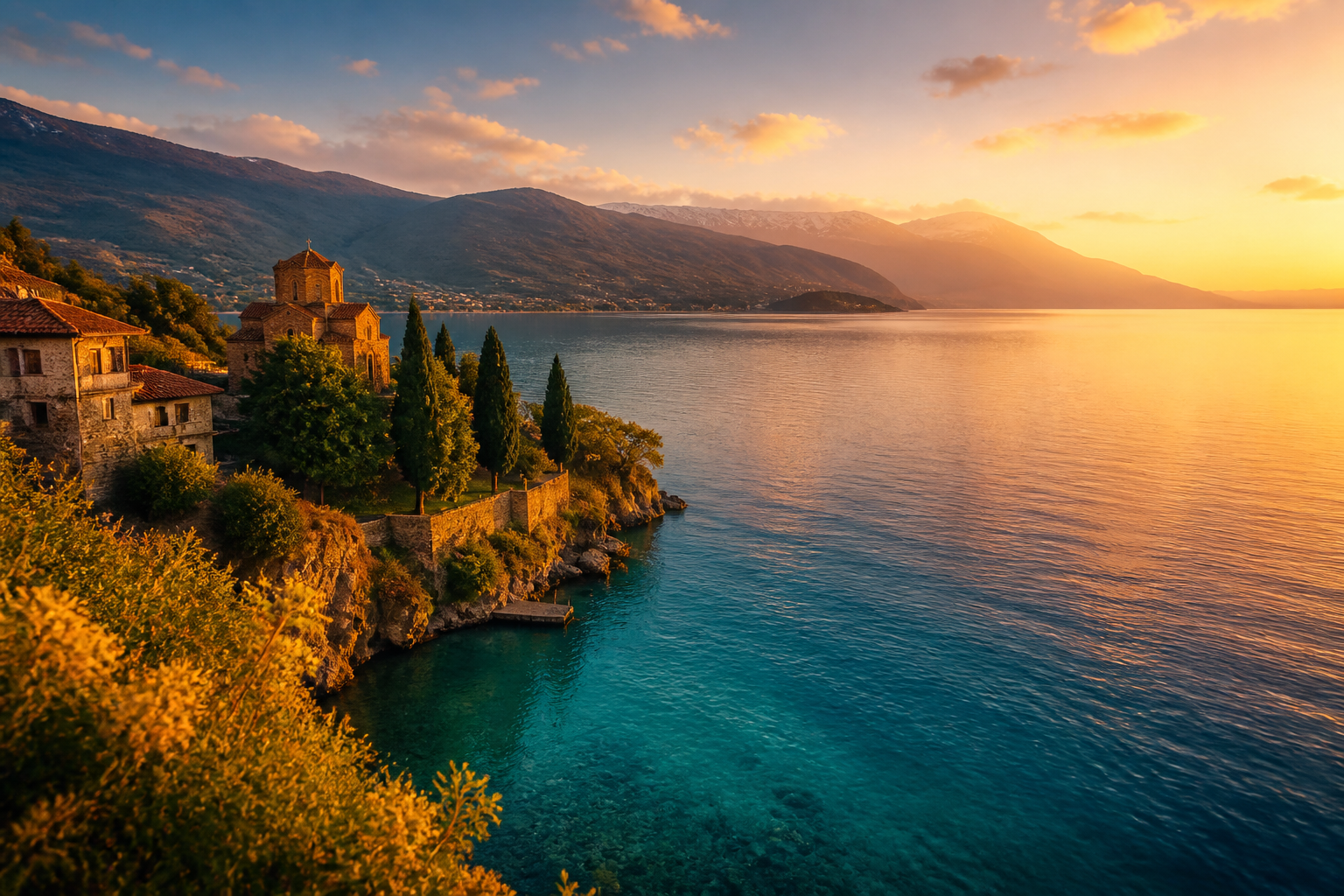
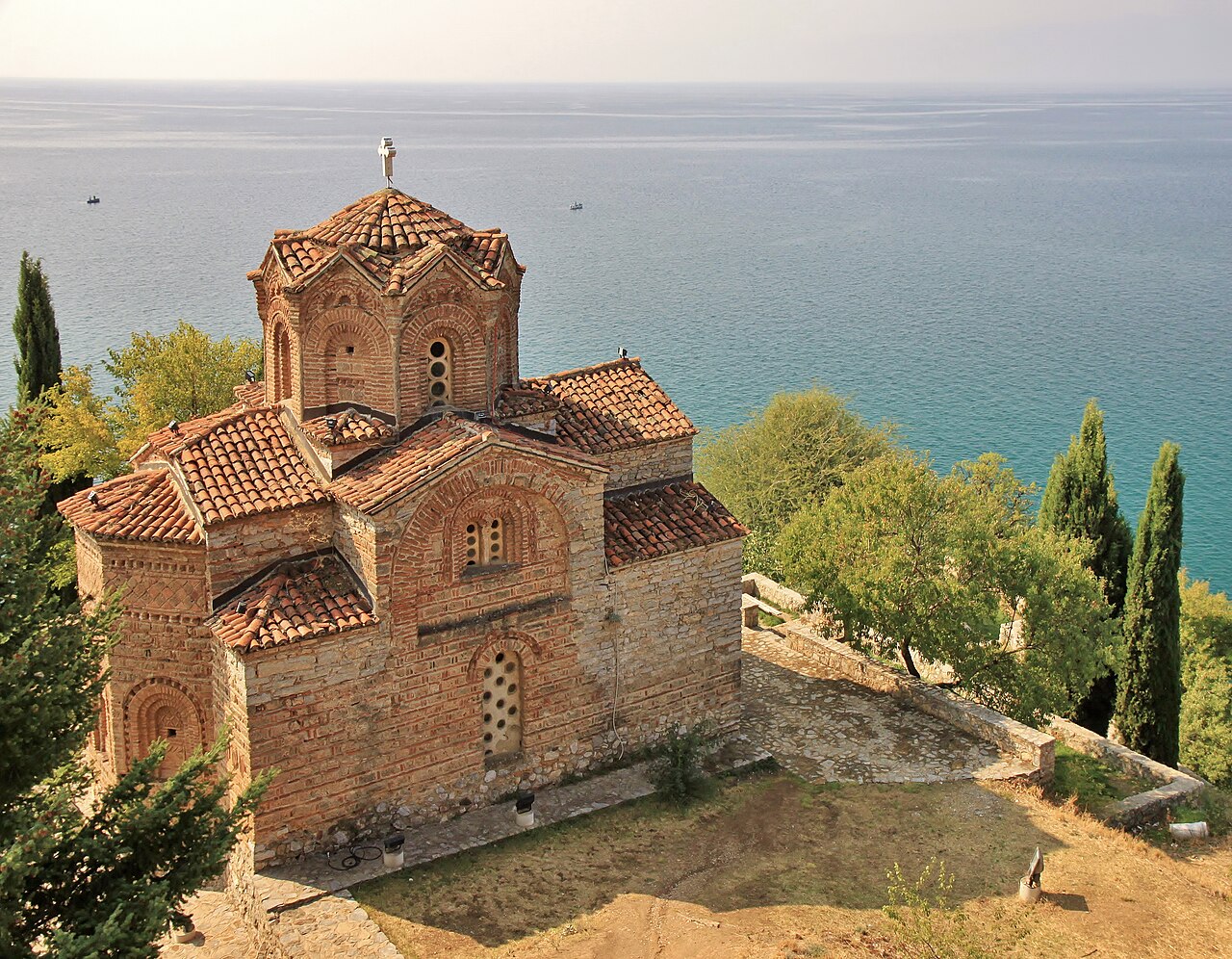
4. St. John at Kaneo — the icon of Ohrid
If one image defines Ohrid, it's St. John the Theologian at Kaneo — quite possibly the most photographed spot in North Macedonia.
Approach from the wooden boardwalk along the Old Town cliffs: crystal-clear lake on one side, rocky precipice on the other. Round the final bend and there it is — a small Byzantine church silhouetted against Lake Ohrid and the mountains of Albania.
We spent hours on the grassy bank watching boats below, waiting for sunset. Golden hour ignites the stone. Unlike so many famous landmarks, Kaneo doesn't just meet expectations — it shatters them.
5. The Bay of Bones — a glimpse into prehistory
A short scenic drive from Ohrid: the Bay of Bones, a reconstruction of a prehistoric pile-dwelling settlement (1200–700 BC). Archaeologists found thousands of wooden piles driven into the lakebed — a village built on water.
Walk onto the wooden platform into circular huts of wattle, daub and thatch. Tools, pottery, animal hides recreate daily life 3,000 years ago. Look out across the same timeless lake its inhabitants saw. A time machine, not just a museum.
6. St. Naum Monastery — birthplace of Cyrillic?
At the lake's southern end near the Albanian border: the Monastery of St. Naum (founded 905 AD).
St. Naum and St. Clement were disciples of Cyril and Methodius, creators of the first Slavic alphabet. The Ohrid Literary School educated thousands and laid foundations for Slavic culture. Many historians believe the script evolved here into the Cyrillic alphabet used across Eastern Europe and Russia.
Peacocks roam the gardens. Legend says you can hear St. Naum's heartbeat if you press your ear to his stone tomb. Faith, history and language converge.
7. The soul-soothing springs of St. Naum
Below the monastery: crystal-clear springs bubble up to form a small pristine lake before feeding Lake Ohrid. A huge portion of the lake's water emerges here, filtered through the mountains.
The only way to truly experience it: a rowboat tour. Water so transparent you see every pebble. The boatman uses only a paddle — birds, silence, springs burbling beneath. In places the sand dances as water forces up from below. Cleansing. Like floating through the lake's lifeblood.
8. Samuel's Fortress — views from the top
To grasp Ohrid's scale, climb Samuel's Fortress crowning the hill above the Old Town. Foundations laid when Ohrid was capital of the First Bulgarian Empire — over a thousand years of watch.
From the battlements: 360-degree panorama. Red-tiled Old Town maze, modern city beyond, Lake Ohrid shimmering inland sea to hazy Albanian mountains. Spot St. John at Kaneo on its cliff. Trace white wakes from tiny boats. Gorgeous and strategic — you understand why this spot mattered for centuries.
9. Trpejca — the Macedonian St. Tropez
South of Ohrid: Trpejca, a tiny fishing village in a cove at the foot of Galičica. Locals call it the "Macedonian St. Tropez" — though it's far more authentic.
We visited in June and had the place almost to ourselves. Pebbly beach, a handful of houses, family-run restaurants over the water. The owner showed us the catch — grilled lake fish, fresh salad, local cheese. One of the most memorable meals of the trip. The antithesis of a crowded resort; unhurried lake life.
10. An affordable paradise
The most practical reason: incredible affordability. On a continent of jaw-dropping prices, Ohrid sacrifices nothing in beauty.
| What | Rough cost |
|---|---|
| Lakeside dinner for two with wine | Often under €30 |
| St Naum boat trip | Around €15 |
| Coffee by the lake | About €1 |
| Boat day on the lake | Fraction of Italian lake prices |
Affordability changes the trip. Say yes to another boat, another museum, another sunset meal — without budget stress. A stunning destination that's achievable, not just a dream.
How to Plan Your Ohrid Trip
Getting there: Fly into Ohrid Airport or drive from Skopje (~3 hours). Many visitors base in Struga for a quieter, more local feel 15 minutes north.
Suggested itinerary (3–4 days):
- Day 1 — Old Town wander, Ancient Theatre, boardwalk sunset dinner
- Day 2 — St. John at Kaneo morning + Samuel's Fortress afternoon
- Day 3 — Bay of Bones + Trpejca swim and fish lunch
- Day 4 — St. Naum monastery and spring rowboat
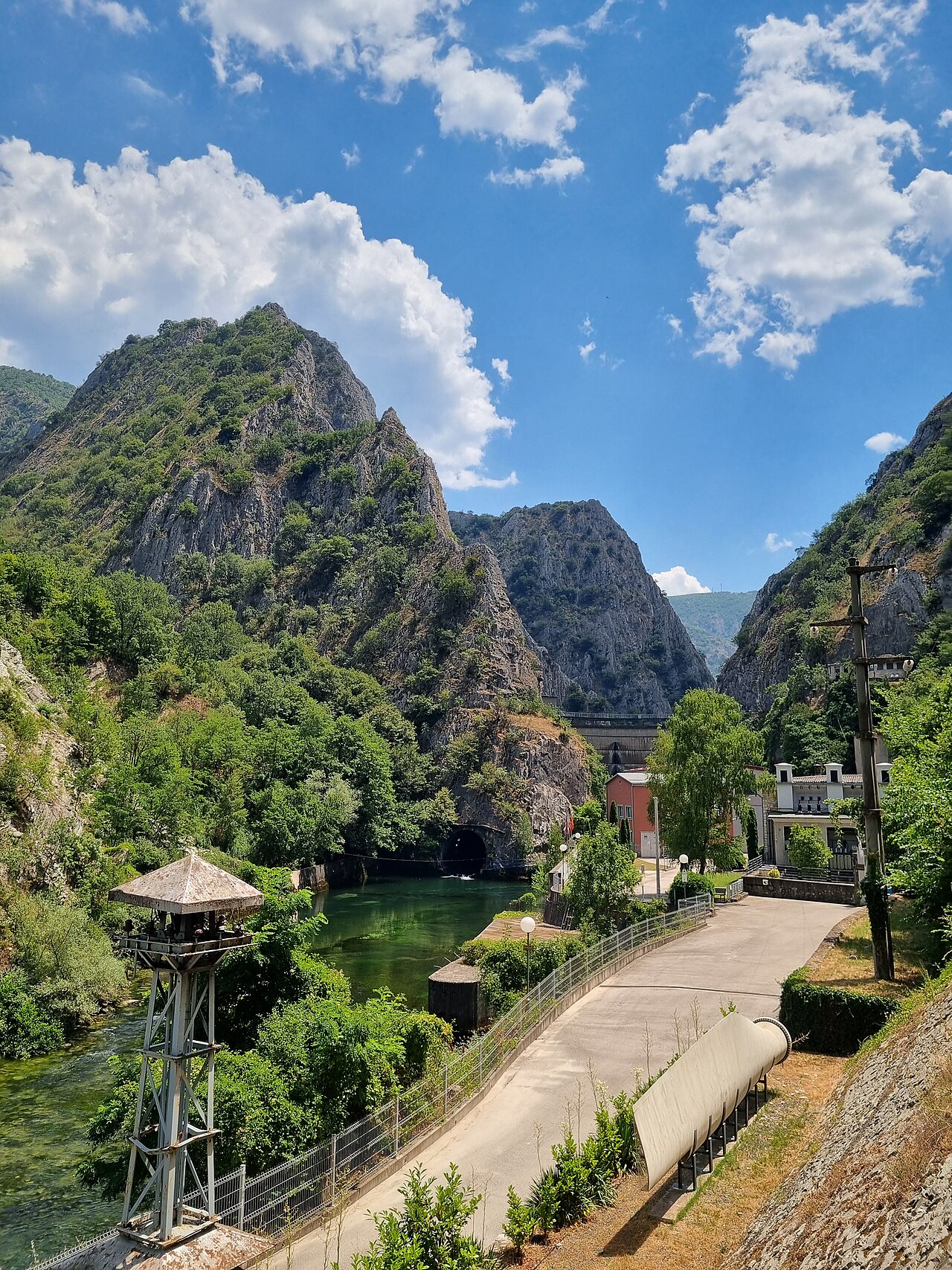
Combine with Matka Canyon and Mavrovo on a longer North Macedonia road trip.
A Fragile Best-Kept Secret
Ohrid's UNESCO status is precious. Tourism is growing — new flights, more attention — but for now this remains rare in modern Europe: authentic, affordable, breathtaking before the crowds arrive.
To visit is to experience a side of Europe rapidly disappearing. It's more than a place on a map — it's an invitation to discover the true soul of the Balkans.
Where to Go Next
| Guide | Link |
|---|---|
| Struga (quieter lake base) | Struga travel guide |
| Full country loop | North Macedonia overview |
| Matka Canyon | Matka complete guide |
| Country hub | North Macedonia destination |
Which reason convinced you? Kaneo at sunset, the St. Naum springs, or that €30 lakeside dinner?
Last verified: August. UNESCO monitoring status and prices change — check current travel advisories and local conditions before booking.
Related guides
destination guide
Mavrovo & Galičnik Road Trip | Western North Macedonia
8 min read
Read guide →
trek complete guide
Matka Canyon, Macedonia | The Complete Guide
Matka Canyon · 28 min read
Read guide →
trek complete guide
North Macedonia Travel Guide | Europe's Best-Kept Secret
North Macedonia Road Trip · 9 min read
Read guide →